MÆDICA - a Journal of Clinical Medicine Logo
  • Home
  • Profile
  • Standards
    • Types of articles
    • Instructions for authors
    • Editing rules (peer-review protocol)
    • Official Journal’s protocols
  • Editorial Council
  • Peer-review TEAM
  • How to
  • Menu

Author archives

  • About
  • Latest Posts

Cristiana VOICU

Latest posts by Cristiana VOICU (see all)

  • Juvenile Colloid Milium: Case Report and Literature Review - July 19, 2019
  • Diseases of Civilization – Cancer, Diabetes, Obesity and Acne – the Implication of Milk, IGF-1 and mTORC1 - December 21, 2018
  • Butterfly Effect – the Concept and its Implications in Dermatology, Acne, and Rosacea - July 2, 2018

Articles signed on MÆDICA, JCM:

Juvenile Colloid Milium: Case Report and Literature Review

SELECT ISSUE


MÆDICA - a Journal of Clinical Medicine | Vol. 14, No. 2, 2019
CNCSIS - CMR - B+ OBBCSSR

Members Area


Juvenile Colloid Milium: Case Report and Literature Review

Cristiana VOICU, Carmen LISIEVICI, Crenguta COMAN and Tiberiu TEBEICA

ABSTRACT

Juvenile colloid milium (JCM) is a rare, chronic, benign but cosmetically disturbing degenerative dermatosis, characterized by the appearance of translucent papules on sun-exposed areas before puberty. The juvenile form of colloid milium is thought to be caused by an inherited susceptibility to ultraviolet (UV) light, transmitted in an either autosomal dominant or recessive manner, eventually leading to keratinocyte degeneration. The prevalence of JCM is unknown due to the scarcity of case reports. This paper describes the case of a 10 years old male patient diagnosed with JCM which, according to the information available so far, is the first such case reported in Romania.
Keywords: juvenile colloid milium, keratinocyte degeneration, UV susceptibility, translucent papules, sun-exposed areas

Full text | PDF

Diseases of Civilization – Cancer, Diabetes, Obesity and Acne – the Implication of Milk, IGF-1 and mTORC1

SELECT ISSUE


MÆDICA - a Journal of Clinical Medicine | Vol. 13, nr. 4, 2018
CNCSIS - CMR - B+ OBBCSSR

Members Area


Diseases of Civilization – Cancer, Diabetes, Obesity and Acne – the Implication of Milk, IGF-1 and mTORC1

Victor Gabriel CLATICI, Cristiana VOICU, Catalina VOAIDES, Anca ROSEANU, Madalina ICRIVERZI and Stefana JURCOANE

ABSTRACT

Nutrition and food are one of the most complex aspects of human lives, being influenced by biochemical, psychological, social and cultural factors. The Western diet is the prototype of modern dietary pattern and is mainly characterized by the intake of large amounts of red meat, dairy products, refined grains and sugar. Large amounts of scientific evidence positively correlate Western diet to acne, obesity, diabetes, heart disease and cancer, the so-called “diseases of civilization”. The pathophysiological common ground of all these pathologies is the IGF-1 and mTORC pathways, which will be disscussed further in this paper.
Keywords: cancer, diabetes, obesity, acne, milk, IGF-1, mTORC1

Full text | PDF

Butterfly Effect – the Concept and its Implications in Dermatology, Acne, and Rosacea

SELECT ISSUE


MÆDICA - a Journal of Clinical Medicine | Vol. 13, nr. 2, 2018
CNCSIS - CMR - B+ OBBCSSR

Members Area


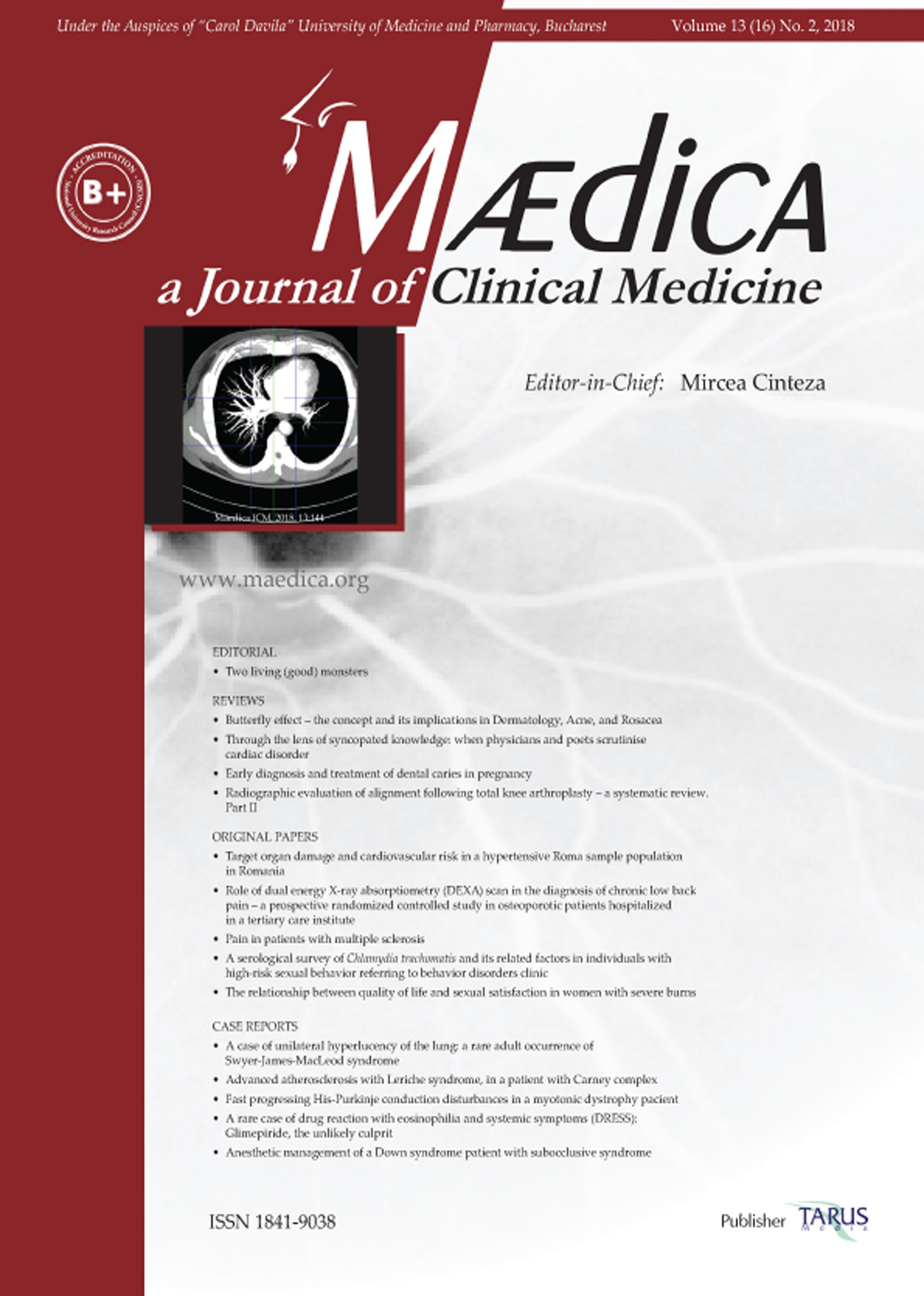
Butterfly Effect – the Concept and its Implications in Dermatology, Acne, and Rosacea

Victor Gabriel CLATICI, Francesca SATOLLI, Alin Laurentiu TATU, Cristiana VOICU, Ana Maria Veronica DRAGANITA and Torello LOTTI

ABSTRACT

Acne and Rosacea are chronic inflammatory skin diseases with an increasing frequency and an important negative impact on the quality of life, which are associated with a large number of false myths regarding causes and treatment. The butterfly effect is associated with chaos theory, and it is a concept originated in meteorology, which represents the dependence on initial conditions.
Keywords: butterfly effect, dermatology, acne, rosacea, skin care, diet, public health, chronic disease.

Full text | PDF

Perceived age and life style. The specific contributions of seven factors involved in health and beauty

SELECT ISSUE


MÆDICA - a Journal of Clinical Medicine | Vol. 12, nr. 3, 2017
CNCSIS - CMR - B+ OBBCSSR

Members Area


Perceived age and life style. The specific contributions of seven factors involved in health and beauty

Victor Gabriel CLATICI, Daniel RACOCEANU, Claude DALLE, Cristiana VOICU, Lucia TOMAS-ARAGONES, Servando E. MARRON, Uwe WOLLINA and Simona FICA

ABSTRACT

Objectives: The skin is a dynamic, visible organ, showing the most obvious signs of aging. The mechanisms of extrinsic aging, most of them presented in this paper, are currently well known and also the only ones that can be counteracted. Therefore, the transition of this knowledge in the general population is of the most importance, in order to introduce healthy aging strategies, to prevent the development of chronic or malignant diseases and psychological burden related to old age.
Materials and methods: A thorough review of the literature has been performed in order to identify the main factors involved in skin health and aging.
Outcomes: This concept article represents a compilation of seven anti-ageing directions regarding major factors involved in health, aging and beauty, respectively sun, sugar, smoking, skin care, stress, sleep and second (the passage of time), easy to comprehend by the general public but sustained by a strong scientific documentation.
Conclusions: Despite its final destination, every quality concept has to pass through academic purgatory as, once accepted, it comes to respond to ever more educated society’s demands in terms of anti-ageing.
Keywords: perceived age, health, life style, ageing, intrinsic, extrinsic

Full text | PDF


plic-mail[email protected]

 Terms and conditions

© MÆDICA - a Journal of Clinical Medicine - All rights reserved