MÆDICA - a Journal of Clinical Medicine Logo
  • Home
  • Profile
  • Standards
    • Types of articles
    • Instructions for authors
    • Editing rules (peer-review protocol)
    • Official Journal’s protocols
  • Editorial Council
  • Peer-review TEAM
  • How to
  • Menu

Author archives

  • About
  • Latest Posts

Morteza BAGHERI

Latest posts by Morteza BAGHERI (see all)

  • 10-Hydroxy-2-Decenoic Acid Prevents Ultraviolet A-Induced Expression of Lamin AΔ150 in Human Dermal Fibroblasts - February 5, 2020
  • Tumor Necrosis Factor-alpha Gene Expression in PBMCs of Iranian Azeri Turkish Patients with Premature Coronary Artery Disease (Age ≤50 Years) - March 30, 2018
  • Analysis of Interleukin-17 mRNA Level in the Urinary Cells of Kidney Transplant Recipients with Stable Function - December 30, 2017

Articles signed on MÆDICA, JCM:

10-Hydroxy-2-Decenoic Acid Prevents Ultraviolet A-Induced Expression of Lamin AΔ150 in Human Dermal Fibroblasts

SELECT ISSUE

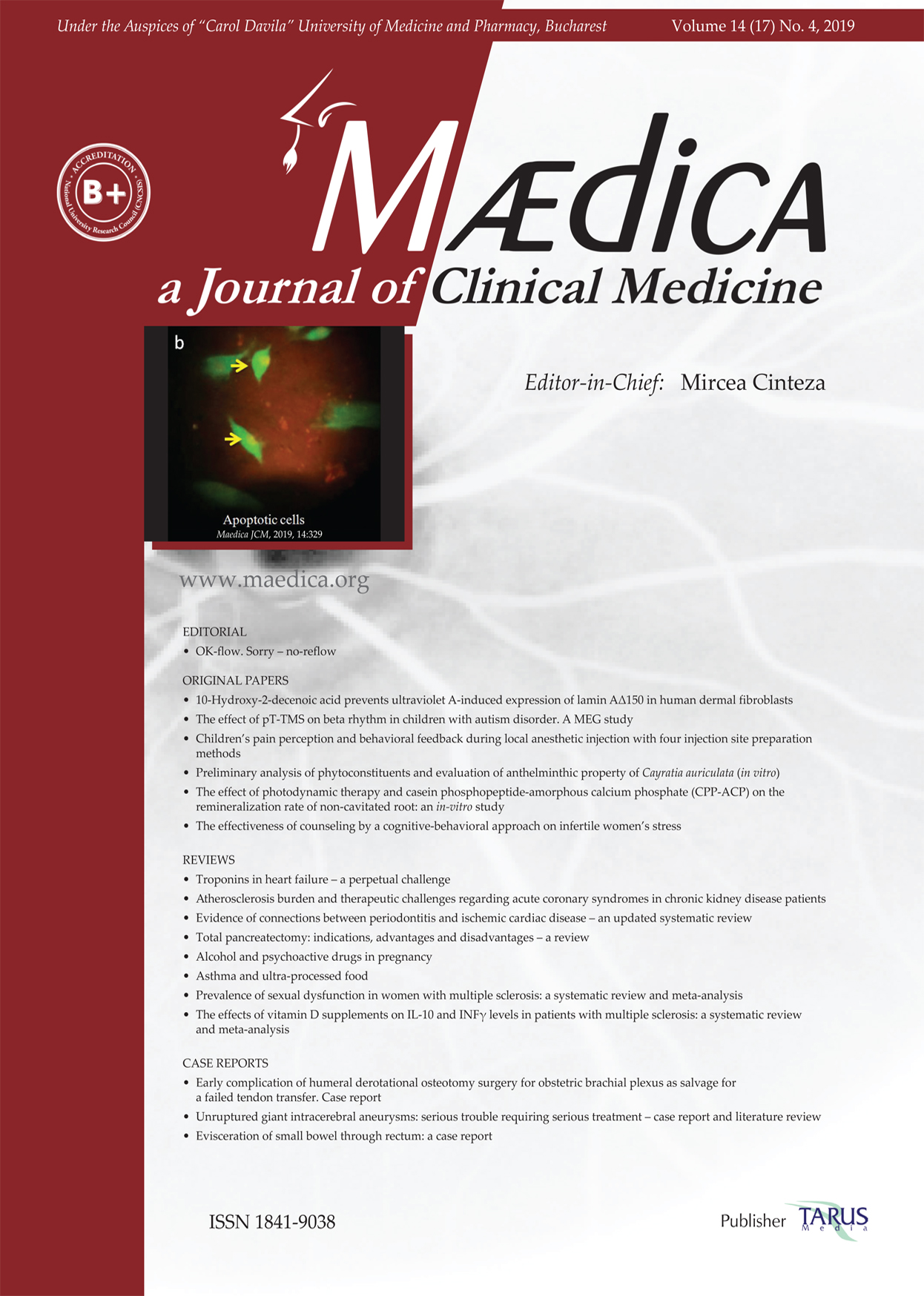
MÆDICA - a Journal of Clinical Medicine | Vol. 14, No. 4, 2019 CNCSIS - CMR - B+ OBBCSSR

Members Area


10-Hydroxy-2-Decenoic Acid Prevents Ultraviolet A-Induced Expression of Lamin AΔ150 in Human Dermal Fibroblasts

Shahrzad MIRBAHA, Morteza BAGHERI and Salar MAHMOUDI-NEJAD

ABSTRACT

10-Hydroxy-2-decenoic acid (10-HDA) as the main component of royal jelly has pharmacological characteristics. But the influence of 10-HDA on skin photoaging and photo damage is poorly understood. In the present study, we used 10-HAD immediately after UVA exposure and tested the effects on the attenuation of LMNAΔ150 expression in cultured human dermal fibroblasts.
Human dermal fibroblasts (cultured cells) were exposed to UVA irradiation. The mRNA level of LMNAΔ150 was determined by Taqman Real-Time PCR Assay.
Real-time PCR analysis of LMNAΔ150 transcripts indicated that the level of LMNAΔ150 transcripts was higher in the UVA exposed group than the group treated with 10-HAD after UVA exposure (>8.22-fold). The LMNAΔ150 expression is down-regulated in human dermal fibroblasts after treatment with 10-HDA.
It can be concluded that treatment with 10-HDA suppresses the UVA-induced gene expression of LMNAΔ150 and protects skin from UVA-induced photoaging and photo damage.
Keywords: 10-HAD, UVA, LMNAΔ150, photoaging.

Full text | PDF

Tumor Necrosis Factor-alpha Gene Expression in PBMCs of Iranian Azeri Turkish Patients with Premature Coronary Artery Disease (Age ≤50 Years)

SELECT ISSUE


MÆDICA - a Journal of Clinical Medicine | Vol. 13, nr. 1, 2018
CNCSIS - CMR - B+ OBBCSSR

Members Area


Tumor Necrosis Factor-alpha Gene Expression in PBMCs of Iranian Azeri Turkish Patients with Premature Coronary Artery Disease (Age ≤50 Years)

Mahssa HASSAN-NEJHAD, Morteza BAGHERI, Kamal KHADEM-VATANI, Mir Hossein SEYED MOHAMMAD ZAD, Isa Abdi RAD, Behzad RAHIMI, Ali ROSTAMZADEH and Amir RAHIMLOU

ABSTRACT

Background: Coronary artery disease is the leading cause of disability and mortality in Iran and worldwide. Tumor necrosis factor-alpha is a pro-inflammatory cytokine that plays a key role in inflammatory cascades and atherosclerosis. It regulates cytokine networks and adhesion molecule expression, and activates several signal transduction pathways, being also known as transducer of cardiovascular diseases, especially premature coronary artery disease.
Objective: The aim of the present study was to investigate tumor necrosis factor-alpha gene expression in Iranian Azeri Turkish patients with premature coronary artery disease (age ≤50 years).
Material and methods: Eighty four individuals (42 cases and 42 controls) were enrolled in the study. Total RNA was extracted from patients with premature coronary artery disease using RNX-Plus Solution (Cat. No.: RN7713C) and reverse transcribed into cDNA. The tumor necrosis factor-alpha mRNA expression level was evaluated using Real-Time PCR.
Results: The mean ± SE of fold in cases and controls were 1.1±1.08 and 1.6±3.4, respectively. The mean expression of tumor necrosis factor-alpha mRNA (fold) was not statistically different between the tested groups (P value 0.4).
Outcomes: Our outcome failed to find evidence for any association between tumor necrosis factor-alpha mRNA expression and premature coronary artery disease. Large scale, more detailed studies are further needed to prove our results and to propose other mechanisms in the pathophysiology of premature coronary artery disease.
Keywords: TNF-α, gene expression, premature coronary artery disease.

Full text | PDF

Analysis of Interleukin-17 mRNA Level in the Urinary Cells of Kidney Transplant Recipients with Stable Function

SELECT ISSUE


MÆDICA - a Journal of Clinical Medicine | Vol. 12, nr. 4, 2017
CNCSIS - CMR - B+ OBBCSSR

Members Area


Analysis of Interleukin-17 mRNA Level in the Urinary Cells of Kidney Transplant Recipients with Stable Function

Morteza BAGHERI, Ali TAGHIZADEH-AFSHARI, Saeed ABKHIZ, Isa ABDI-RAD, Mohammadreza MOHAMMADI-FALLAH, Mansour ALIZADEH and Saeed SADEGHZADEH

ABSTRACT

Introduction: Kidney transplantation supports patients with end-stage kidney diseases. Many factors control the allograft function in kidney transplant recipients. Interleukin-17 (IL-17) can be used as a non-invasive diagnostic biomarker of rejection. The aim of this study was to evaluate the expression of IL-17 mRNA in urinary cells of kidney transplant recipients with stable function.
Material and methods: A total of 40 renal transplant recipients who were admitted for surgery and 30 healthy controls were enrolled in the study. From each patient, 30 mL urine samples were collected in 50 mL tubes on days 3 and 5 after renal transplantation; also, 30 mL urine samples were obtained from controls. Quantitative Real-Time PCR (qRT-PCR) technique was used for analysis of IL-17 mRNA level in the tested groups; 2-ΔΔCT method was performed for determining the relative gene expression between tested groups.
Results: The mRNA expression mean ± SE of fold in patients and controls were 3.58±1.61 fold and 2.85±1.37 fold, respectively. The mRNA expression mean of IL-17 (fold) was not statistically different in tested groups (P-value = 0.63).
Conclusions: In kidney transplant recipients, urinary IL-17 expression provides informative data in relation to the allograft function regardless of allograft pathology.
Keywords: interleukin-17, kidney transplant recipients, urinary cells

Full text | PDF

Analysis of the most common three MEFV mutations in 630 patients with familial Mediterranean fever in Iranian Azeri Turkish population

SELECT ISSUE


MÆDICA - a Journal of Clinical Medicine | Vol. 12, nr. 3, 2017
CNCSIS - CMR - B+ OBBCSSR

Members Area


Analysis of the most common three MEFV mutations in 630 patients with familial Mediterranean fever in Iranian Azeri Turkish population

Morteza BAGHERI and Isa Abdi RAD

ABSTRACT

Introduction: The aim of the present study was to determine the frequency of M694V, M680I and V726A mutations of the MEFV gene in 630 Azeri Turkish patients with family Mediterranean fever.
Material and Methods: The MEFV gene mutations were detected using allele-specific oligonucleotide polymerase chain reaction.
Outcomes: 630 cases with a mean age ± SD of 28.54±16.54 ranging from 2.5 to 76 years old including 268 (42.54%) males and 362 (57.46%) females, were tested. Nineteen patients were homozygote for one mutation (3.02%), 127 were heterozygote for one mutation (20.2%) and 18 were compound heterozygote for two mutations (2.86%). Mutation analysis confirmed that the most common mutation was M694V 109 (8.65%). V726A and M680I mutations accounted for 4.44% of the alleles; V726A 32 (2.54%) and M680I 24 (1.9%). In this study, compound heterozygote for M694V and V726A, M694V and M680I, and V726A and M680I mutations were found in 1.43%, 0.79%, and 0.63% from West Azerbaijan province in exon 10. Mutation was found in 164 (26.03%) of cases regarding analysis of the three most common MEFV mutations, but in 466 (73.97%) of cases, no mutation was detected. Among our samples, the frequencies of mutant genotypes were 15 (2.38%), 1 (0.15%), 3 (0.47%), 9 (1.42%), 4 (0.63%) and 5 (0.79%), regarding M694V/M694V, M680I/M680I, V726A/V726A, M694V/ V726A, M680I/ V726A and M680I/M694V, respectively. In our samples, 79 (12.53%), 26 (4.12%), and 22 (3.49%) cases had M694V/normal, V726A/normal, and M680I/normal genotypes regarding M694V, V726A, and M680I mutations, respectively.
Conclusions: The M694V mutation is the most common risk factor for family Mediterranean fever in our group.
Keywords: MEFV, FMF, M694V, M680I, V726A

Full text | PDF

Vitamin D Receptor Gene Haplotype and Late-Onset Obesity in Iranian Azeri Turkish Women

SELECT ISSUE


MÆDICA - a Journal of Clinical Medicine | Vol. 12, nr. 2, 2017
CNCSIS - CMR - B+ OBBCSSR

Members Area


Vitamin D Receptor Gene Haplotype and Late-Onset Obesity in Iranian Azeri Turkish Women

Morteza BAGHERI, Fatemeh BAHADORI, Shahsanam GHEIBI, Tahereh BEHROOZ LAK, Zahra SAHEBOZAMANI, Zahra KUSE-LU and Isa ABDI-RAD

ABSTRACT

Introduction: A large body of literature has revealed the association between vitamin D3-VDR complex and obesity. The aim of the present study was to survey the rate of the VDR polymorphisms in obese women and to determine whether there may be an association between VDR BsmI and Tru9I haplotypes and obesity in Iranian Azeri Turkish women.
Material and methods: 65 Iranian Azeri Turkish women were enrolled in the study and PCR amplification and direct sequencing of PCR products were used for genotypings.
Results: The findings of this study showed that VDR BsmIG allele, VDR BsmI G/G genotype, VDR BsmI A/A genotype, Tru9IA allele and Tru9I A/A genotype were more frequent in obese women compared to controls. The frequency of VDR BsmIG/Tru9IA (GA), VDR BsmIG/Tru9IG (GG), VDR BsmIA/Tru9IG (AG), and VDR BsmIA/Tru9IA (AA) haplotypes were 19.74%, 42.11%, 38.16% and 0% in cases, and 11.11%, 40.74%, 42.59 and 5.56% in controls. Statistically significant differences were found between cases and controls regarding the VDR AA haplotype (P=0.03).
Conclusions: Our findings demonstrated that the VDR AA haplotype frequency was significantly lower in subjects with obesity compared with normal controls. This study shows that the VDR AA haplotype is significantly associated with a decreased risk of obesity in the tested group. This report is the first of its kind in the West Azerbaijani population.

Keywords: VDR, haplotype, obesity, women

Full text | PDF

Frequency of the VNTR-Polymorphisms at the PAH Gene in the Iranian Azeri Turkish Patients with Phenylketonuria

SELECT ISSUE

MÆDICA - a Journal of Clinical Medicine | Vol. 10, nr. 4, 2015 CNCSIS - CMR - B+ OBBCSSR

Members Area


Frequency of the VNTR-Polymorphisms at the PAH Gene in the Iranian Azeri Turkish Patients with Phenylketonuria

Morteza BAGHERI, Isa Abdi RAD, Nima Hosseini JAZANI, Rasoul ZARRIN and Ahad GHAZAVI

ABSTRACT

Introduction: This study was carried out to determine the frequency of the VNTR-polymorphisms at the PAH gene in the Iranian Azeri Turkish patients with phenylketonuria (PKU) and normal controls.

Material and methods: The VNTR-polymorphisms were determined by PCR in 43 PKU patients as well as 43 controls.

Outcomes: The frequencies of VNTR-alleles were 13(15.1%), 3(3.49%), 64(74.4%), 5(5.81%), and 1(1.16%) in the patients and 43(50%), 0(0%), 42(48.8%), 0(0%), and 1(1.16%) in the controls regarding 3, 7, 8, 9, and 11 repeat copies, respectively. The VNTR alleles with 12 and 13 repeats were not found in our samples. The frequencies of VNTR-genotypes were 25(58.1%), 1(2.33%), 1(2.33%), 10(23.3%), 2(4.65%), 2(4.65%), 1(2.33%), 1(2.33%), and 0(0%) in the patients and 13(30.2%), 13(30.2%), 0(0%), 16(37.2%), 0(0%), 0(0%), 0(0%), 0(0%) and 1(2.33%) in the controls regarding VNTR8/VNTR8, VNTR3/VNTR3, VNTR3/VNTR9, VNTR8/VNTR3, VNTR8/VNTR9, VNTR7/VNTR9, VNTR7/VNTR8, VNTR8/VNTR11, and VNTR3/VNTR11 genotypes, respectively. The comparisons of VNTRpolymorphisms imply that there are statistically significant differences between the patients and controls regarding VNTR3, VNTR8, and VNTR9 alleles as well as VNTR8/VNTR8 and VNTR3/VNTR3 genotypes (all P-Value <0.05). The frequency of “risk-associated genotype of VNTR8/VNTR8” was significantly higher in the cases. 

Conclusions: It is concluded that this position is heterozygous and there were statistically significant differences between patients and controls concerning the VNTR8/VNTR8 genotype. We found higher frequencies of disease-associated genotype in our samples than controls. This report is the first in its own type in the west Azerbaijani population. Further studies require assessing how this genotype predicts adverse outcomes in tested population.

Keywords: VNTR, polymorphism, PKU

Full text | PDF

Association Between PAH Mutations and VNTR Alleles in the West Azerbaijani PKU Patients

SELECT ISSUE

MÆDICA - a Journal of Clinical Medicine | Vol. 9, nr. 3, 2014

CNCSIS - CMR - B+ OBBCSSR

Association Between PAH Mutations and VNTR Alleles in the West Azerbaijani PKU Patients

Morteza BAGHERI, Isa Abdi RAD, Nima Hosseini JAZANI, Rasoul ZARRIN and Ahad GHAZAVI

ABSTRACT

Introduction: We report the frequency of IVS10nt546, R261Q, S67P, R252W, and R408W mutations linked to PAH VNTR alleles in the west Azerbaijani PKU patients.

Material and methods: VNTR alleles and IVS10nt546, R261Q, S67P, R252W, R408W mutations were studied in a total of 20 PKU patients by PCR and RFLP-PCR.

Outcomes: Our analysis showed that 95% of cases were homozygote for an allele containing eightrepeat VNTR (VNTR8); while 5% were homozygote for an allele containing three-repeat VNTR (VNTR3). The IVS10nt546, R252W, and R261Q mutations were associated with VNTR8 allele, and also, R252W and S67P mutations were associated with VNTR3 allele. VNTR8 was common among mutant alleles as were IVS10nt546–VNTR8 (50%), R252W–VNTR8 (2.5%), and R261Q–VNTR8 (22.5%). The association of VNTR3 was found as R252W–VNTR3 (2.5%) and S67P–VNTR3 (2.5%) among studied cases. The frequency of IVS10nt546–VNTR8/IVS10nt546–VNTR8, IVS10nt546– VNTR8/ND–VNTR8, IVS10nt546–VNTR8/R252W–VNTR8, R261Q–VNTR8/R261Q–VNTR8, R261Q–VNTR8/ND–VNTR8, and S67P–VNTR3/ R252W–VNTR3 were 30%, 35%, 5%, 20%, 5%, and 5%, respectively. R408W mutation was not found in this study. Conclusions: The present report is the first in its own kind in the west Azerbaijani population (Iran) and implies that the most common PKU mutation in this population, IVS10nt546, is exclusively associated with VNTR8 allele, and IVS10nt546–VNTR8 alleles testing should be considered for routine carrier screening and prenatal diagnostic setting.

Full text | PDF


plic-mail[email protected]

 Terms and conditions

© MÆDICA - a Journal of Clinical Medicine - All rights reserved