MÆDICA - a Journal of Clinical Medicine Logo
  • Home
  • Profile
  • Standards
    • Types of articles
    • Instructions for authors
    • Editing rules (peer-review protocol)
    • Official Journal’s protocols
  • Editorial Council
  • Peer-review TEAM
  • How to
  • Menu

Author archives

  • About
  • Latest Posts
Mircea CINTEZA

Mircea CINTEZA

Emergency University Hospital, Bucharest, Romania
“Carol Davila” University of Medicine and Pharmacy, Bucharest, Romania
Mircea CINTEZA

Latest posts by Mircea CINTEZA (see all)

  • OK-Flow. Sorry – No-Reflow - February 3, 2020
  • Chronic Heart Failure with Normal Contractility - October 17, 2019
  • Two New Drug Fronts to Attack Chronic Heart Failure - July 19, 2019

Articles signed on MÆDICA, JCM:

Hypertension: Scandal? Or Just Normality?

SELECT ISSUE

MÆDICA - a Journal of Clinical Medicine | Vol. 10, nr. 4, 2015 CNCSIS - CMR - B+ OBBCSSR

Members Area


Hypertension: Scandal? Or Just Normality?

Mircea CINTEZA

Almost 2 years before, in the first 2014 issue of this Journal, I stated that it is abnormal that almost all the important world hypertension (HT) guidelines just issued at that moment considered that the universal therapeutic target for blood pressure (BP) lowering in ”non-old” patient population should be 140/90 mm Hg (1). The 2013, ESC/ESH Guidelines admitted only for diabetes a slightly lower target – 140/85 mm hg, while both American guidelines (JNC 8 and ASH/ISH Guidelines, issued in 2014) gave a target of 140/90 mm Hg even for diabetics. This was so in the conditions in which just a few years before the target in Europe and America was for HT diabetics 130/80 mm Hg and even lower when kidney were involved. In my paper I considered that in HT people not considered old the target should be lower, because they do not generally have the risk of hypotension and their benefit on long term should be greater with low levels of blood pressure (1).

In November this year an important argument for our point of view was published in New England Journal of Medicine (2). The SPRINT trial clearly showed that in a population of less than 75 years of age a therapeutic blood pressure target of 120 mm Hg gave a significant better outcome at 3.26 years than the standard today target of 140 mm hg for the systolic blood pressure. There are many details which endorse this conclusion. The number of patients was consistent – 9361 patients. The cardiovascular risk of patients was high, but patients with diabetes, previous stroke or kidney involvement were excluded. The planned duration of the study was 5 years, but the results were so clearly better for the 120 mm Hg target group that the steering committee ended the study only after 3.26 years, considering is was un-ethical to continue for the group of 140 mm Hg target BP. Last, but not least, the powerful NHLBI (National Heart Lung and Blood Institute), which retired in 2014 from the group ellaborating the Joint National Committee 8 Guidelines, considering there are too many unanswered questions regarding that guidelines, was now one of the sponsors of the study.

So, contrary to all the actual main Hypertension Guidelines, the best systolic blood pressure target in a consistent HT population was found to be 120 mm Hg and not the guideline target of 140 mmHg. The SPRINT Study demonstrated that death from any cause, death from cardiovascular causes or the composite primary otcome were significantly lower when treating to a target of 120 mm Hg. In the mean time, the serious adverse effects were simmilar in the two groups.

Many positive comments appeared almost instantaneously . Starting with the first paper on Perspective in Medicine in the same issue of New Engl J Med (3) and continuing with two out of three Editorials of the same issue of the Journal. Attention! It is hard to find (if really can be found) another subject with four papers in the same issue of the prestigious Number 1 Journal of Clinical Medicine in the world! The main American bood pressure journal made a comment in 4 days (!) after the electronic publising of the SPRINT Study (4). It is funny to see that the main European journal of hypertension, by the voice of Alberto Zanchetti, the Editor in Chief of the journal and one of the main contributors to the 2013 ESC/ESH Guidelines on HT, did not say any comment on the SPRINT study, even in the first 2016 issue of their journal. Zanchetti only makes some comments on Japanese and Korean studies (5)

It happens rarely that a study conducted under the most serious auspices seriously contradicts all the acting guidelines in the field, ellaborated also under serious auspices. However, as we considered some time ago, those guidelines contradict the common clinical good sense. Their guilt could be that they did not comment in any manner that the conclusions of the available Evidence Based Medicine of that moment were not totally logical and some correction has to be expected. By the SPRINT study, this correction was clearly done.

We have to be very attentive to the evolution of the quarell and the possible implication on the Hypertension Guidelines.

Full text | PDF

Atherosclerosis in Systemic Sclerosis: a Modern Controversy

SELECT ISSUE

MÆDICA - a Journal of Clinical Medicine | Vol. 10, nr. 3, 2015 CNCSIS - CMR - B+ OBBCSSR

Members Area


Atherosclerosis in Systemic Sclerosis: a Modern Controversy

Stefania L. MAGDA, Raluca I. MINCU, Carmen M. MIHAI, Mircea CINTEZA and Dragos VINEREANU

ABSTRACT

Systemic sclerosis (SSc) is a chronic disease of unknown etiology. The main feature of SSc is microvascular disease, but contemporary studies in the field have confirmed the presence of macrovascular affectation. Due to its inflammatory background, and higher cardio- and cerebrovascular death rates, it is presumed that SSc is more frequently associated to accelerated atherosclerosis, similarly to other autoimmune diseases, such as systemic lupus erythematosus or rheumatoid arthritis.

The assessment of subclinical atherosclerosis in patients with SSc through different methods (such as intima media thickness, echo-tracking, wave intensity, pulse wave velocity, flow mediated dilation, nitroglycerin mediated dilation, ankle brachial pressure index or coronary angiotomography) has failed to show concordant results, regardless of the used tool.

In this review, we try to synthetise the most recent evidence about atherosclerotic involvement in SSc, reviewing the association between SSc and risk factors and also performing a summary of studies that compared atherosclerosis in SSc to controls.

Our research leads to the conclusion that in order to elucidate the extent of atherosclerosis and its consequences in SSc, further investigations are needed, combining atherosclerosis assessment tools and larger number of patients.

Keywords: systemic sclerosis, atherosclerosis, evaluation methods, discordance

Full text | PDF

mHealth. Attention!

SELECT ISSUE

MÆDICA - a Journal of Clinical Medicine | Vol. 10, nr. 3, 2015 CNCSIS - CMR - B+ OBBCSSR

Members Area


mHealth. Attention!

Mircea CINTEZA

Recently, at the 24th meeting of the Central and East European Chambers of Physicians held in September 2015 in Tirana, Albania, a report from Germany underlined that more than 2000 (two thousands!) mobile devices are currently used for medical purposes. „Their classification and the consecutive rules of approval for secure use seem not to be appropriate”, the German delegate said. Let us have a look to the problem.

mHealth is derived from eHealth. eHealth is the larger segment, defined as using information and communication technology for health services and information (1). mHealth reffers to the practice of medicine and public health using mobile devices. This definition is complex, because it includes:

• collection of clinical health data
• collection of community health data
• delivery of healthcare information to practitioners and researchers
• delivery of healthcare information to patients
• real-time monitoring of patient vital signs
• affordance of health care

All these elements of definition include devices which collect clinical signs, software to transmit and store data, most often on computers/servers belonging to eHealth systems and information given to doctors and especially to patients. We may say that eHealth is the backbone of mHealth. But mHealth is the more complicated issue, because in the domain of collecting clinical signs and in the information provided to the patient there is a huge overlap between medical and non-medical devices, between medical and pure marketing information. The regulation of the appropriate use of these devices and information constitues a real challenge in mHealth.

Both United States and Europe did develop regulation in this field (2,3). The FDA regulations seem to be larger and more detailed and are summarized and commented in the issue “Medical Device Data Systems, Medical Image Storage Devices, and Medical Image Communications Devices“ published online on February 9, 2015.

They define the basic non medical equipment of mHealth by a mobile platform (mobile phone, tablet or other mobile computer with or without wireless connectivity) which runs a mobile application (software). The Mobile Medical Application – a specific medical software – may transform the mobile platform into a Regulated Medical Device. Here comes the interesting philosophy of FDA which complicates the issue. If the Mobile Medical App only is used as an accessory to the device, FDA intends only to exercise what is called enforcement discretion (meaning that FDA does not intend to enforce requirements under the FD&C Act – the basic act under which FDA impose severe rules to approve a drug, a medical device, a food additive etc. – (4). In this way, FDA only takes notice of that device, but does not apply its general rules of approval. On the contrary, if the software does transform the mobile device in a medical one, as defined by FD&C Act, the severe rules of FDA approval are applied.

Examples of general purpose tools which necessitate only ”enforcement discretion” are medical calculators for: Body Mass Index (BMI), mean arterial pressure, APGAR score, Glasgow Coma Scale score and many similar others. Very important, in this field there are also many information to the patient, such as advices for smokers trying to quit, advices for addictors in recovery or for pregnant women. Other very interesting information may be those given to asthmatics about presence of allergens in their environment, information for those who want to take plant products as therapy about possible interactions with drugs or video information or games to motivate patients to perform their indicated daily physical activity. In the FDA documents there are tens of such examples of so called intermediate conditions, which are not neglected by the FDA, but are included in the softer procedure of ”enforcement discretion”(2).

The European regulations are not so detailed. In the Green Paper published in 2014 (3), the definitions are however clear. mHealth covers „medical and public health practice supported by mobile devices” as well as „personal guidance systems, health information and medication reminders provided by SMS and telemedicine”. There are two categories of mHealth applications: a) for the purpose of diagnosis, prevention and treatment of diseases and b) for the purpose of lifestyle and fitness. The regulation dedicated to mHealth is included in the Medical Devices Directive (93/42/EEC) and the In Vitro Diagnostic Medical Devices Directive (98/79/EEC), both under revision (5). The considerations on this subject are numerous and in an attempt to clarify, in 2014 in the documents of EU appeared a manual to classify medical devices (6).

All these data show how complex is the problem of mobile health care. Non-medical industry does produce monthly tens of new devices dedicated to consumers and showing numerous measurements in direct linkage with body activity. These may be medically important and the producers do not submit their device to medical certification. There are monthly tens of medical advices spread by the most different channels, mostly by electronic ones. These are often not revised by doctors, nor approved by a regulatory body, are only consumer directed.

In an era of some 5 billion mobile phone subscribers in the word from a total of 7 billion (about three quarters of the word population) and a network territory coverage of more than 80%, in the era when new sensors are developed every year (such as accelerometers, GPS, new light detectors, barometers, gyroscopes etc.) regulation of all the new devices by the medical authorities is almost impossible. It is the task of doctors to be very attentive to the information given to their patients by the devices, especially from those consumers dedicated and to check the medical advices spread by mass media. It is their task to correct all the dangerous consequences of a wrong information produced by a wrong device or a wrong adviser, but which are very quickly adopted by patients, so sensitive to the internet and media information.

This is a difficult task in an era when the time to talk to the patient is more and more limited.

However, this is a major duty for the doctor of today!

Full text | PDF

Outcome and Predictors of Stent Thrombosis in the First Romanian Registry of Drug Eluting Stent (RODESINO EXTENSION)

SELECT ISSUE

MÆDICA - a Journal of Clinical Medicine | Vol. 8 (11), no. 2 2013

CNCSIS - CMR - B+ OBBCSSR

HIGHLIGHTS

What is plagiarism

Plagiarism’s meaning comes from the Latin word ‘plagiarius,’ which means to kidnap. When someone uses the work of another writer or artist without properly citing the source or giving credit, that’s plagiarism. [...]

Committe on Publication Ethics

A forum for responsible and ethical research publishing – Code of Conduct and Best Practice Guidelines for Journal Editors.

Members Area


Outcome and Predictors of Stent Thrombosis in the First Romanian Registry of Drug Eluting Stent (RODESINO EXTENSION)

Claudiu STOICESCU, Vlad VINTILA, Cristian UDROIU, Nicolae FLORESCU, Aws DAWOOD, Mircea CINTEZA and Dragos VINEREANU

ABSTRACT

Background: Stent thrombosis (ST) is a rare, but extremely severe complication of PCI. Outside clinical trials, data are limited regarding the risks and the impact of this phenomenon.

Aims: To assess prevalence, predictors, and clinical outcome of ST after implantation of drug eluting stents (DES) compared with bare metal stents (BMS), in a large case-control study in a real world scenario, as well as the relation between ST and duration of combined antiplatelet treatment.

Methods: In a case-control registry we included 475 patients who received at least 1 DES (sirolimus, zotarolimus, everolimus, paclitaxel), compared with a group of 475 patients who received at least 1 BMS. We used 1.22 DES/patient vs. 1.26 BMS/patient (p=ns), treating 1.02 DES/lesion vs. 1.05 BMS/ lesion (p=ns). Main outcome was ST defined by the Academic Research Consortium (ARC) as definite (acute, sub-acute, late), probable, and possible.

Results: At 15 months we found 0.8% (4) patients in the DES group vs. 1.1% (5) patients in the BMS group with definite ST (ns); 0.4% (2) patients from each group had acute ST, while 0.4% (2) vs. 0.7% (3) patients had sub-acute ST (both comparisons were ns). None of the patients from the DES group died, whereas two patients with definite ST from the BMS group died, with a case fatality rate of 40% (2/5). 0.2% (1) patient from each group had probable ST (ns) and 0.6% (3) vs. 0.4% (2) patients had possible ST (ns). Independent predictors of stent thrombosis in merged groups were antiplatelet therapy discontinuation (HR 3.8; 95%CI 1.9-7.6; p<0.01), diabetes (HR 2.15; 95%CI 1.4-5.1; p<0.01), a lower left ventricular ejection fraction (EF) (HR 1.1; 95%CI 1.0-1.9; p<0.01 for each 10% decrease), and LAD lesions (HR 1.0; 95%CI, 0.93-1.9; P<0.01).

Conclusions: ST is a rare complication (0.95%), similar after DES or BMS implantation. Premature discontinuation of antiplatelet therapy, followed by diabetes and a lower LVEF, are the independent predictors of ST.

Full text | PDF

The Impact of Blood Pressure Variability on Subclinical Ventricular, Renal and Vascular Dysfunction, in Patients with Hypertension and Diabetes

SELECT ISSUE

MÆDICA - a Journal of Clinical Medicine | Vol. 8 (11), no. 2 2013

CNCSIS - CMR - B+ OBBCSSR

HIGHLIGHTS

What is plagiarism

Plagiarism’s meaning comes from the Latin word ‘plagiarius,’ which means to kidnap. When someone uses the work of another writer or artist without properly citing the source or giving credit, that’s plagiarism. [...]

Committe on Publication Ethics

A forum for responsible and ethical research publishing – Code of Conduct and Best Practice Guidelines for Journal Editors.

Members Area


The Impact of Blood Pressure Variability on Subclinical Ventricular, Renal and Vascular Dysfunction, in Patients with Hypertension and Diabetes

Leonida GHERASIM, Andrea O. CIOBANU, Carmen Lucia GHERGHINESCU, Raluca DULGHERU, Stefania MAGDA, Ruxandra DRAGOI GALRINHO, Maria FLORESCU, Suzana GUBERNA, Mircea CINTEZA and Dragos VINEREANU

ABSTRACT

Background: Blood pressure variability (BPV) was proved as a cardiovascular risk factor. One of its mechanisms is related to arterial stiffness and ventriculo-arterial coupling; however its impact on subclinical cardiovascular dysfunction has not been evaluated yet.

Objectives: To assess the relationship between BPV on 24 hours, and subclinical left ventricle (LV), renal, and vascular dysfunction in diabetic and hypertensive patients. Material and methods: We studied 56 patients (57±9 years, 29 men) with mild-to-moderate hypertension and type 2 diabetes, no cardiovascular disease, normal ejection fraction and normal renal function. 24 hours ambulatory blood pressure monitoring (ABPM) was used to assess BPV, daytime (d) and night time (n), by: 1. mean (M); 2. standard deviation of mean (SD); 3. variance (Vr); 4. coefficient of variation (CV); 5. day/night variation: reverse dippers, non-dippers, dippers and extreme dippers; conventional and 2D speckle tracking echo to assess LV function; myocardial deformation was measured as global longitudinal strain (GLS). Endothelial (flow mediated dilation, FMD) and arterial function (intima media-thickness, IMT; pulse wave velocity, PWV), microalbuminuria were tested.

Outcomes: Daytime BPV correlates inversely with subclinical myocardial function evaluated through GLS. Daytime systolic BPV correlates positively with IMT (all rho > 0.30, all p < 0.05). Also, there is a significantly inverse correlation between mean BP and GLS. We found a direct correlation between mean BP, but not BPV, and microalbuminuria (all rho > - 0.30 and all p < 0.05). We found no correlation between BPV and FMD, PWV. There were no differences for GLS, microalbuminuria and FMD between dipper groups.

Conclusions: In diabetic patients with mild-to-moderate hypertension, increased daytime blood pressure variability correlates with subclinical left ventricular dysfunction and arterial function (IMT), while microalbuminuria correlates with elevated blood pressure, but not with blood pressure variability.

Keywords: blood pressure variability, ventricular dysfunction, diabetes, hypertension

Full text | PDF

Worsening of Heart Failure after Abdominal Surgery – Can we predict it?

SELECT ISSUE

MÆDICA - a Journal of Clinical Medicine | Vol. 8 (11), no. 2 2013

CNCSIS - CMR - B+ OBBCSSR

HIGHLIGHTS

What is plagiarism

Plagiarism’s meaning comes from the Latin word ‘plagiarius,’ which means to kidnap. When someone uses the work of another writer or artist without properly citing the source or giving credit, that’s plagiarism. [...]

Committe on Publication Ethics

A forum for responsible and ethical research publishing – Code of Conduct and Best Practice Guidelines for Journal Editors.

Members Area


Worsening of Heart Failure after Abdominal Surgery – Can we predict it?

Nora TOMA, Ruxandra DRAGOI GALRINHO, Gabriela BICESCU, Raluca ENACHE, Mircea CINTEZA and Leonida GHERASIM

ABSTRACT

Background: The cardiopulmonary test has demonstrated its role in predicting long term prognostic of patients with heart failure, but only few data are available regarding its utility on short term period.

Methods: During 2011-2013, the study enrolled 55 patients over 18 years, with different cardiovascular, metabolic and/or pulmonary pathologies, and 10 control patients matched for age, sex and surgical intervention type, without an associated pathological history who underwent elective abdominal surgery with general anesthesia.

Results: The most important predictors of the heart failure worsening after abdominal surgery were peak VO2 as percent of predicted VO2 lower than 59.42±12.52, ventilator equivalent for CO2 at anaerobic threshold over 39.53±5.27 and VD/VT ratio at anaerobic threshold over 0.33±0.06. Lean VO2 lower than 9.58±2.47 also correlated with the above mentioned complication. The ventilator equivalent for CO2 , above 39.53±5.27 at anaerobic threshold, respectively 40.67±6.73 at peak exercise, correlates with short term worsening of heart failure after general anesthesia for abdominal surgery.

Conclusion: The CPX test has a certain value in predicting short term worsening of heart failure after general anesthesia for elective abdominal surgery in patients known with cardiovascular, pulmonary and/or metabolic disorders.

Full text | PDF

New Echocardiographic Tehniques in Pulmonary Arterial Hypertension vs. Right Heart Catheterization – A Pilot Study

SELECT ISSUE

MÆDICA - a Journal of Clinical Medicine | Vol. 8 (11), no. 2 2013

CNCSIS - CMR - B+ OBBCSSR

HIGHLIGHTS

What is plagiarism

Plagiarism’s meaning comes from the Latin word ‘plagiarius,’ which means to kidnap. When someone uses the work of another writer or artist without properly citing the source or giving credit, that’s plagiarism. [...]

Committe on Publication Ethics

A forum for responsible and ethical research publishing – Code of Conduct and Best Practice Guidelines for Journal Editors.

Members Area


New Echocardiographic Tehniques in Pulmonary Arterial Hypertension vs. Right Heart Catheterization – A Pilot Study

Tudor CONSTANTINESCU, Stefania Lucia MAGDA, Rodica NICULESCU, Raluca Ileana MINCU, Dragos ZAHARIA, Claudia Lucia TOMA, Mircea CINTEZA and Miron Alexandru BOGDAN

ABSTRACT

Background: Pulmonary arterial hypertension (PAH) represents an emerging pathology in modern medicine. Transthoracic echocardiography is an inexpensive and reproducible method and it is the most commonly used non-invasive diagnostic tool to asses pulmonary artery pressure (PAP) and the function of the right ventricle. Although, the right heart catheterization is still considered as the standard for the diagnosis, according to the last guidelines, the new echocardiographic methods may offer an improved value in the PAH evaluation.

Aim: To evaluate if cardiac ultrasonography data correlate with catheterization results in patients with PAH (Group I Dana Point 2008), and to compare the ultrasonography evaluation of PAH patients with that of normal.

Methods: 15 consecutive patients (pts) (52±15 yrs, 5 men, time from onset of symptoms 1.6±1.7 years) with PAH of different aetiologies (12 pts with idiopathic PAH, 2 pts with PAH associated with scleroderma and one with persistent PAH after atrial septal defect (ASD) closure) were evaluated through: 1. clinical examination (NYHA class); 2. exercise capacity (6 minute walking test – 6MWT); 3. conventional echocardiography (diameter of right ventricle – RVD and right atrium, fractional area shortening – FAS, TAPSE, pulmonary ascension time – PA, systolic and mean PAP -sPAP, mPAP, tricuspid E/A ratio, cardiac index-CI) and 4. Tissue Doppler Imaging – TDI (systolic and diastolic myocardial velocities at the tricuspid annulus – S, D, A); 5. right heart catheterization (sPAP, mPAP, CI, pulmonary vascular resistance – PVR) We compared classical and TDI echo parameters with those obtained from 15 normal subjects, matched in age and sex.

Results: PAH patients had high sPAP and mPAP with right heart dilation (RV - 44.8±7.3 mm), depressed TAPSE (16.2±5.9 mm) and cardiac index and low TDI systolic velocities at tricuspid level (7.3±2.9 cm/s). All parameters differed statistically significant from normal. There were no significant correlations between ultrasonography and catheterization (cath) parameters (sPAP 92±28.2 echo vs. 106.4±25.8 mmHg cath; mPAP 47.9±8.4 echo vs. 65.8±17.3 mmHg cath), excepting for CI 2.3±1.2 l/ min/m2 vs. 2.08±0.3 ml/min/m2 ) and PVR (16.5 ± 15.3 Wood U echo, vs. 19.6 ± 7.9 cath).

Conclusion: Classic and TDI cardiac ultrasonography represents a good screening and monitoring tool for PAH patients, but tends to underestimate the severity of the disease, leaving right heart catheterization as the essential diagnostic method for this rare disease.

Keywords: pulmonary arterial hypertension, echocardiography, Tissue Doppler Imaging, right heart catheterization

Full text | PDF

Antiarrhythmic Therapy, 20 Years After

SELECT ISSUE

MÆDICA - a Journal of Clinical Medicine | Vol. 8 (11), no. 2 2013

CNCSIS - CMR - B+ OBBCSSR

HIGHLIGHTS

What is plagiarism

Plagiarism’s meaning comes from the Latin word ‘plagiarius,’ which means to kidnap. When someone uses the work of another writer or artist without properly citing the source or giving credit, that’s plagiarism. [...]

Committe on Publication Ethics

A forum for responsible and ethical research publishing – Code of Conduct and Best Practice Guidelines for Journal Editors.

Members Area


Antiarrhythmic Therapy, 20 Years After

Mircea CINTEZA

Any therapy in medicine fits one of the following categories: tablets, interventional, surgical and various. In the last category we put now lifestyle and diet, physiotherapy and rehabilitation, and alternative medicine procedures.

As a professor of cardiology, 20 years ago, I was teaching students on therapy of rhythm disturbances. In acute cases we used electric shock cardio version. For the rest of arrhythmias – and there were a lot, textbooks of over 1000 pages described them – the main therapy was with drugs. I was lecturing with attention the pros and the cons of many drugs in the well-known classification of Vaughan Williams. This took between 10 and 20% of all the teaching hours dedicated to cardiology.

In the last 20 years the teaching lectures on arrhythmology changed dramatically. First of all I realized that no antiarrhythmic drug cures any rhythm disturbance. Practically, only 2 drugs remained with a significant antiarrhythmic use: amiodarone and beta blockers. All other which I once described in detail during my lectures still exist, but with very, very limited clinical use. Their side effects are today more relevant then the benefits.

Interventional arrhythmology is now the king of diagnosis and, most of all, the king of efficient therapy.

The main fields of today arrhythmology are:
A. Basic non-invasive field, diagnostic only: ECGs, Signal Averaged ECG, non-invasive mapping, Holter and some others.
B. Main invasive field, including electrophysiology and devices (1,2), both with main therapeutic procedures:
    1. electrophysiology:
        a. electrophysiological studies (diagnostic);
        b. ablation:
            • simple arrhythmias, such as:
                • atrio-ventricular nodal reentry tachycardia; 
                • AV reciprocating tachycardia – visible or concealed – including Wolff-Parkinson-White (WPW) syndrome;
                • atrial flutter.
            • complex arrhythmias:
                • atrial fibrillation;
                • atrial tachycardia (focal, reentrant);
                • ventricular tachycardia.
    2. devices:
        a. simple devices: pacemakers and implantable loop recorders;
        b. complex devices: defibrillators and resynchronization devices;
        c. lead (and device) extractions (a different kind of game).

Most of these arrhythmology procedures are finally dedicated to cure the rhythm disturbances. Sometimes rhythm disturbances do not come back any more. Sometimes they reappear, but much more rarely and without the same aggressivity. There are arrhythmias which are really cured: atrio-ventricular nodal reentry, atrio-ventricular reciprocating tachycardia, atrial flutter. Other, like atrial fibrillation, atrial tachy cardia and ventricular tachycardia are not always cured. In these cases there may be failures. And for atrio-ventricular blocks – there is no “cure”, but there is efficient therapy.

What is most important, in many cases the short and long term mortality may be improved. This is totally applicable in the field of device therapy. Intracardiac defibrillators and cardiac resynchronization therapy, when properly indicated, are proved to decrease mortality. For a rrhythmias of any kind the effect on mortality is more complicate to evaluate. A clear positive example is for the high-risk patients with WPW syndrome, such as those with pre-excited atrial fibrillation, where the risk of sudden cardiac death reaches 1%/year; in these patients WPW ablation provides a complete cure. For other arrhythmias, ablation – when successful - provides symptomatic relief and decreases recurrent hospitalizations. But to date there is not demonstrated the clear decrease of mortality for common atrial fibrillation or for ventricular tachycardia.

With what costs? The cost-efficiency is in very good limits for any life saved or for any cost of the avoided therapy of an acute episode which does not appear.

The struggle now is to make all the procedures closer to the total cure of the rhythm disturbance for which they are dedicated.

In the most famous writings on the theme “… 20 years after” most of the characters are older, sometimes wiser, sometimes in a better social position, sometimes… old only. Twenty years later, arrhythmology is younger and stronger than ever.

Full text | PDF

Can we Cure Type 2 Diabetes Mellitus ? Maybe Yes !…

SELECT ISSUE

MÆDICA - a Journal of Clinical Medicine | Vol. 8 (11), no. 3 2013

CNCSIS - CMR - B+ OBBCSSR

HIGHLIGHTS

What is plagiarism

Plagiarism’s meaning comes from the Latin word ‘plagiarius,’ which means to kidnap. When someone uses the work of another writer or artist without properly citing the source or giving credit, that’s plagiarism. [...]

Committe on Publication Ethics

A forum for responsible and ethical research publishing – Code of Conduct and Best Practice Guidelines for Journal Editors.

Members Area


Can we Cure Type 2 Diabetes Mellitus ? Maybe Yes !…

Mircea CINTEZA

The human body contains in its gut a number of bacterial cells 10-100 higher than the number of the cells of the human body itself. The totality of the genome of these foreign cells is called “metagenome” and the totality of the bacteria in the gut is called “microbiota”.

In the last years it was repeatedly shown that the composition of the microbiota can widely differ from one individual to another, collectively from one geographic region to another and, more than this, is statistically different in people who care some non-communicable chronic diseases like diabetes mellitus (DM) and obesity from people who do not care this illness (1-5).

This raised the hypothesis that the microbiota may influence the moment of the development of the DM, maybe even has a role in the pathophysiology of the diabetes itself and the manipulation of the microbiota can be an important therapeutic tool (1-5). Some “good” and “bad” metabolic products of the gut germs, which for sure influence diabetes or obesity evolution, have been identified (6). Their final action on the guest body is influenced by the type of the barrier the gut opposes to the absorption of the gut germs products (1,4,6) It is shown that gut bacteria metabolic components can favor the development of atherosclerosis and may be an independent cardiovascular risk factor (6).

On the other hand, research in DM pathophysiology makes new steps. Recently, it was shown that in type 2 diabetes beta cells loose in part their identity (7,8) and “dedifferentiate”. This phenomenon leads to the further development of the illness. This raises the possibility of a new therapy of DM by drugs which may contribute to the recovery of the beta-cells identity (7). Another therapeutic tool could be the use of the recently described hormone which increases beta-cell proliferation in a much larger degree than previously described substances (8). Are these two potential therapeutic tools influenced by the gut microbiota?

The research hypotheses of all these new findings are numerous and a huge scientific e nergy seems to be concentrated in the field. The microbiota plays a role in atherogenesis (6). The microbiota influences obesity and diabetes (5). The composition of the gut microbiota (meta genoma) is different in diabetics from non-diabetics (1,2,3). We may raise the hypothesis that the products of the gut bacteria may produce the rise in insulin resistance, which is the very first step in the development of type 2 diabetes.

The role of the gut bacteria in humans is pro bably much more important than we thought before or even think now. We have to bring into memory the fantastic role of Helicobacter Pylori in the development of gastro-duodenal ulcer. This bacteria was considered a normal habitant of human gastrointestinal tract, together with other millions of microorganisms and ignored for decenies. Ulcer was cured by surgeons with Reichel-Polya, Pean-Billroth I or II or other procedures and in reality not cured at all. Today we give a few days cure of drugs and … ulcer is forgot by the patient. As well as the name of those surgical procedures, which are ignored by the young physicians and remembered in the medicine history books only.

Gut microbiota plays a role in neurologic diseases or in rheumatology as well. It contri - bu tes to the development of diabetes, of obesity, of atherosclerosis. New ways to potentially recover beta cells are described.

Why not to think that diabetes mellitus may be cured, as not far away we found the way to cure ulcer by fighting our common body microbes which chronically live inside us? My be the moment of defeating diabetes is not so far anymore.

Full text | PDF

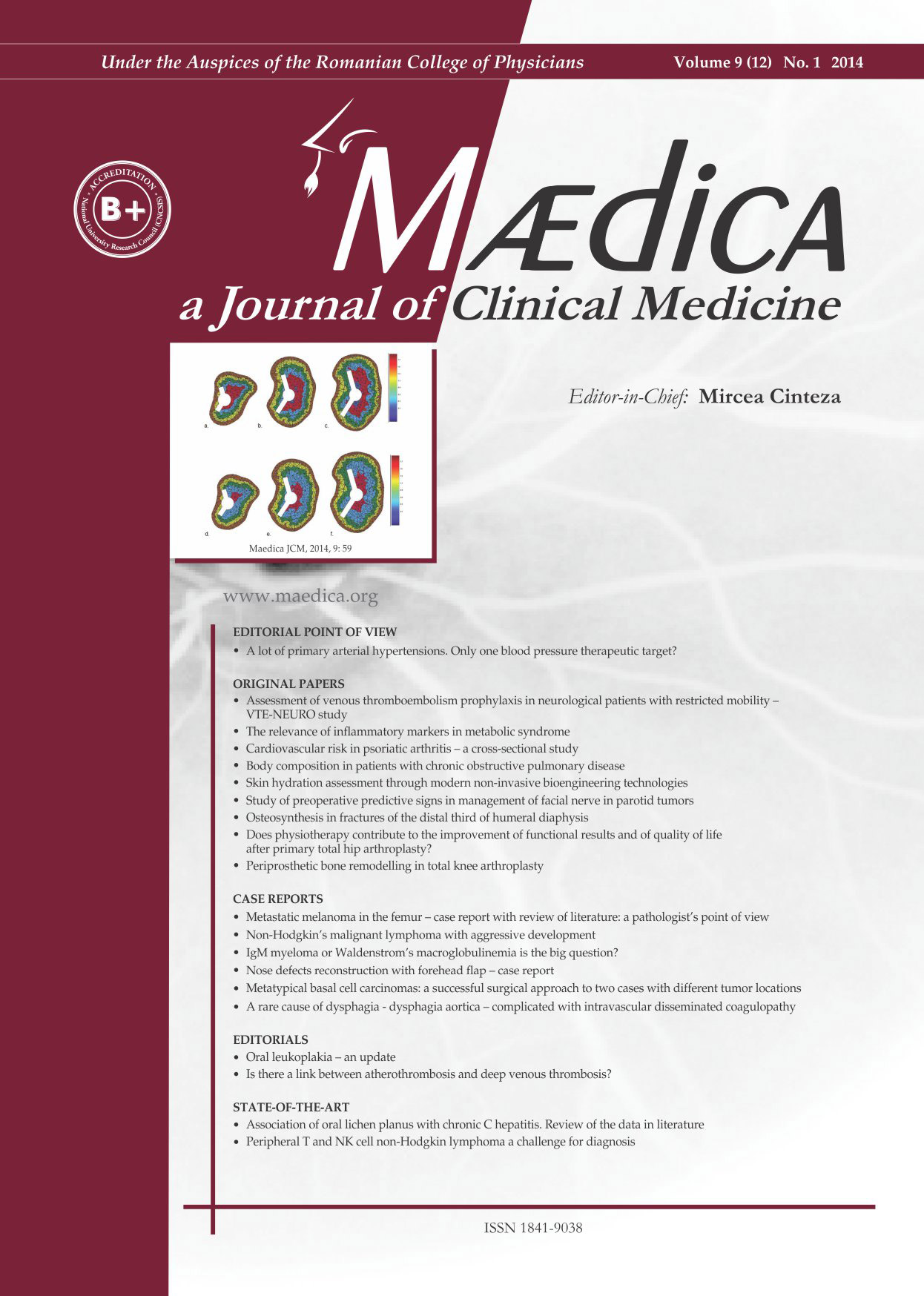
A Lot of Primary Arterial Hypertensions. Only One Blood Pressure Therapeutic Target?

SELECT ISSUE

MÆDICA - a Journal of Clinical Medicine | Vol. 9, nr. 1, 2014

CNCSIS - CMR - B+ OBBCSSR

HIGHLIGHTS

What is plagiarism

Plagiarism’s meaning comes from the Latin word ‘plagiarius,’ which means to kidnap. When someone uses the work of another writer or artist without properly citing the source or giving credit, that’s plagiarism. [...]

Committe on Publication Ethics

A forum for responsible and ethical research publishing – Code of Conduct and Best Practice Guidelines for Journal Editors.

Members Area


A Lot of Primary Arterial Hypertensions. Only One Blood Pressure Therapeutic Target?

Mircea CINTEZA

The prevalence of arterial hypertension (HT) is about 40% in the total adult population and more than 50% in those over the age of 50. From these cases, 90% to 95% have primary hypertension (1-3). It means that much more than 100 million people from Europe and the USA have primary hypertension. HT may be considered the most spread serious disease in this part of the world.

The volume of the medical literature dedicated to HT is huge. The Guidelines for the management of HT are elaborated by each of the most important academic cardiology societies and often renewed. The European Society of Hypertension, joint with the European Society of Cardiology, elaborated the HT Guidelines in 2007, revised in 2009 and published a new edition in 2013 (1). The Joint National Committee (JNC) of the USA had his 7-th edition of the HT Guidelines in 2003 and the 8-th in 2014 (2). In-between there were a lot of Position Papers of the American Society of Hypertension, which also elaborated its own guidelines, published online in 2013 (3). The British, the Canadians, the Australians and many others have their own HT Guidelines.

Any guideline has two main purposes: a correct diagnosis and, most of all, an elaborated protocol of the therapy. Hypertension is a measurable disease. If you have the value of the blood pressure (BP) you may have a correct evaluation of the severity and you can monitor the efficacy of the treatment. So, the recommended target values of the BP after therapy are the milestones of any HT guideline.

In the first decade of this millennium the men tioned guidelines recommended many tar get values for different conditions associated with HT. For instance, the ESC 2007 HT Guidelines recommended a general target of <140/90 mm Hg and a target of < 130/80 mm Hg in HT with diabetes or with high associated cardiovascular risk. These patients constitute a consistent proportion of the hypertensive patients. Even lower BP targets are mentioned in examples of studies. The American HT Guidelines had a similar point of view. JNC 7 recommended a general target for BP of < 140/90 mm Hg and a target of <130/80 mm Hg in HT with diabetes or with renal disease. Many other North American Societies in diabetes, or nephrology also recommended lower BP targets in some categories of HT patients with organ damage.

The attitude changed drastically after 2010. The almost universal BP therapeutic target became 140/90 mm Hg. The 2013 ESH/ESC Guidelines recommend a target of 140/90 mm Hg in all HT conditions, except the elderly, in whom the target should be higher and in diabetics, in whom only the minimum BP should be a little bit lower (<85 mm Hg) (1). Similar position have both North American Guidelines. They recommend a general BP target is <140/90 mm Hg (2,3). In persons over the age of 60 years the target is higher, of 150/90 mm Hg (2) and in no condition a target of less than 140/90 mm Hg is recommended.

This uniform attitude of recommending higher BP therapeutic targets in comparison with former years merits some comments.

Guidelines and handbooks are concordant in the observation that the total cardiovascular risk is proportional with BP value. The risk doubles for each increment of 20 mm Hg for systolic and 10 mm Hg for diastolic BP. But this proportionality starts from the BP value as low as 115/75 mm Hg (1,2). The concept of the J curve, means an increase of risk at very low values of BP is strongly criticized. If the risk starts at so low BP values, why don’t we use those values as therapeutic targets? The answer given by guidelines is that these low BP values are valid for natural condition. If we try to achieve those levels of BP by therapy, the side effects are so dangerous, that they counterbalance the eventual advantage of very low BP targets. If we look in studies in which the achieved BP target is below 130/80 mm Hg, the proportion of reported accidents due to hypotension is low. It is true that the total benefit in mortality and morbidity was not demonstrated for some of those studies. The reality is that there are not enough studies to demonstrate the thesis that hypotension is not a real danger when therapeutic BP is very low in young and middle aged patients.

Another intriguing aspect is linked to the aspect that there is huge variety of clinical and pathophysiological forms of primary hypertension which are considered too uniform regarding the therapeutic BP target. Let’s have a look to the main mechanism of a primary HT: BP can be increased by the contribution of the peripheral resistance, by the inotropism and by the total intravascular fluid. These factors are further determined by the various contribution of the sympathetic nervous drive, the reninangiotensin-aldosterone system, the contractile status of the myocardium, the peripheral vascular constriction or the renal ability to administrate sodium excess. Any of these factors can have different proportions of their contribution in every patient with primary hypertension without organ involvement. If the main mechanism of a primary HT is so various, should be the therapeutic BP value so uniform as 140/90 mm Hg?

In young people the sympathetic drive is often dominant. In medium aged persons the systolic and diastolic hypertension may have a different significance than an isolated systolic one. In more aged the increased stiffness of the vessels may be present without overt atherosclerosis and the consequent isolated systolic hypertension has a different prognosis than a systolic and diastolic HT. The target therapeutic BP could be very different in every of these conditions without an increased risk of hypotension.

In my opinion, the actual uniform BP therapeutic target of 140/90 mm Hg given by the guidelines is too high. It is an accepted assumption that a natural BP of about 120/70 mm Hg has a very significant lower cardiovascular risk than the natural BP value of 140/90 mm Hg. Primary HT without organ damage includes a large variety of mechanisms and natural associated conditions. It is debatable to say that all these conditions should be treated uniformly regarding the target BP.

In the past lower BP therapeutic targets were recommended only for patients with severe associated conditions, like diabetes or kidney involvement. I think that it is time now to do the contrary: to consider lower BP therapeutic targets for those patients with HT without organ damage, in which accidents of hypotension are not probable. In these very many patients lower BP values could substantially reduce cardiovascular risk on a long term.

Full text | PDF

Post navigation

« Previous 1 2 3 4 5 Next »


plic-mail[email protected]

 Terms and conditions

© MÆDICA - a Journal of Clinical Medicine - All rights reserved